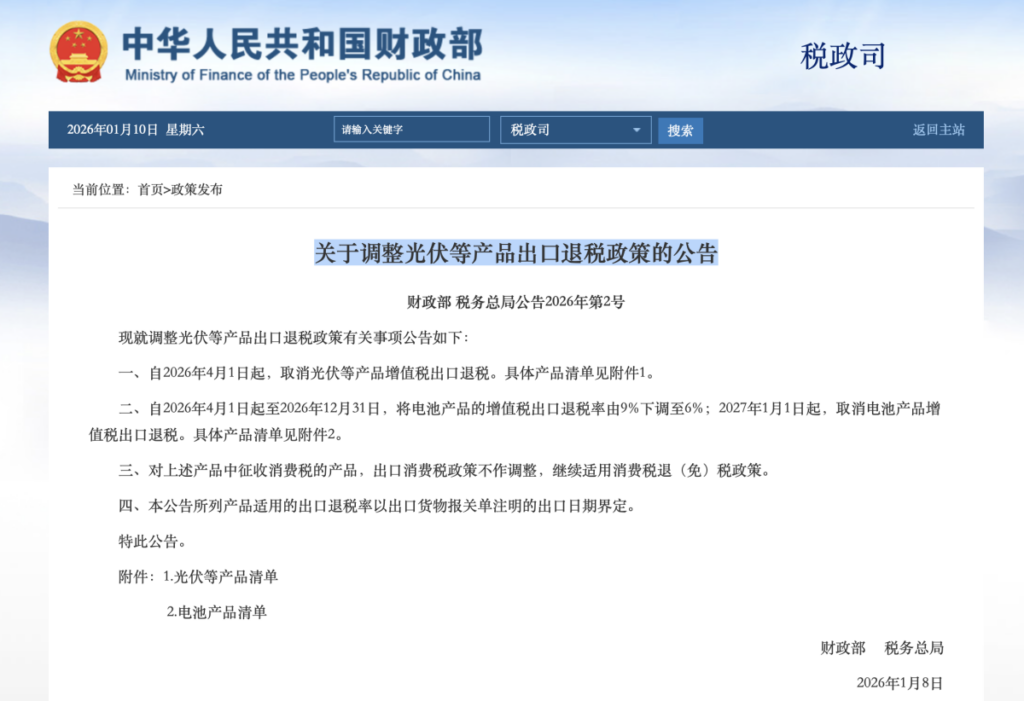
The global vaping industry is facing a major regulatory shift. In early 2026, China’s Ministry of Finance and the State Taxation Administration officially released Announcement No. 2 [2026], signaling the end of an era for subsidized exports.
If you are a vape brand owner, wholesaler, or independent station seller, understanding this timeline is critical to protecting your profit margins.
1. The 2026 Deadline: Key Dates for VAT Changes
The new policy eliminates the Value-Added Tax (VAT) refund on exports, which was previously a cornerstone of competitive pricing for Chinese manufacturers.
Nicotine Products (HS Code 2404120000)
Effective Date: April 1, 2026
Change: The export tax rebate will be completely cancelled (0%).
Impact: This applies to all non-combustible products containing nicotine (e-liquids, disposables, and closed-pod systems).
Battery & Hardware Components
Since many vaping devices are shipped with integrated or separate batteries, the tax adjustment follows a tiered phase-out:
April 1, 2026 – Dec 31, 2026: Rebate rate drops from 9% to 6%.
January 1, 2027: Rebate cancelled entirely.
2. How Will This Affect Your Vape Business?
The removal of a 13% VAT rebate creates a “cost vacuum” that will ripple through the entire supply chain.
Wholesale Price Increases
Most Chinese factories operate on thin margins. Without the 13% tax buffer, manufacturers will likely raise FOB (Free on Board) prices by 8% to 12% to maintain sustainability. Importers should prepare for a significant jump in COGS (Cost of Goods Sold) by Q2 2026.
Inventory Front-Loading
Expect a massive surge in export volume during Q1 2026 (January–March). Savvy distributors are already planning to stockpile inventory before the April 1st deadline to lock in current pricing levels.
Supply Chain Consolidation
Small-scale “white-label” factories that rely solely on tax incentives to stay profitable may struggle to survive. This policy shift favors large-scale, compliant manufacturers who can offset costs through automation and R&D.
3. Strategic Recommendations for Importers
To stay competitive in this new high-cost environment, consider the following steps:
Renegotiate Contracts Early: Discuss price stability with your Chinese suppliers now. Determine who will bear the brunt of the tax increase.
Audit Your HS Codes: Ensure your products are correctly classified. Misclassification to avoid the new tax rules can lead to severe customs penalties.
Focus on Brand Premium: As the price gap between “cheap disposables” and “premium brands” narrows, invest in branding. Consumers are more likely to accept a price hike on a trusted brand than a generic product.
Summary Table: Export Rebate Countdown
| Product Category | Current Rate | April 1, 2026 | Jan 1, 2027 |
| Nicotine-containing Vapes | 13% | 0% | 0% |
| Vape Batteries/Cells | 9% | 6% | 0% |
Stay Informed with Gowif
The 2026 tax reform is a turning point for the e-cigarette industry. We will continue to monitor updates from the China State Taxation Administration to provide you with the latest compliance and pricing insights.