U.S. military tobacco cessation, nicotine alternatives, vaping and smoking cessation, tobacco harm reduction, smoke-free nicotine products, electronic cigarettes for adults
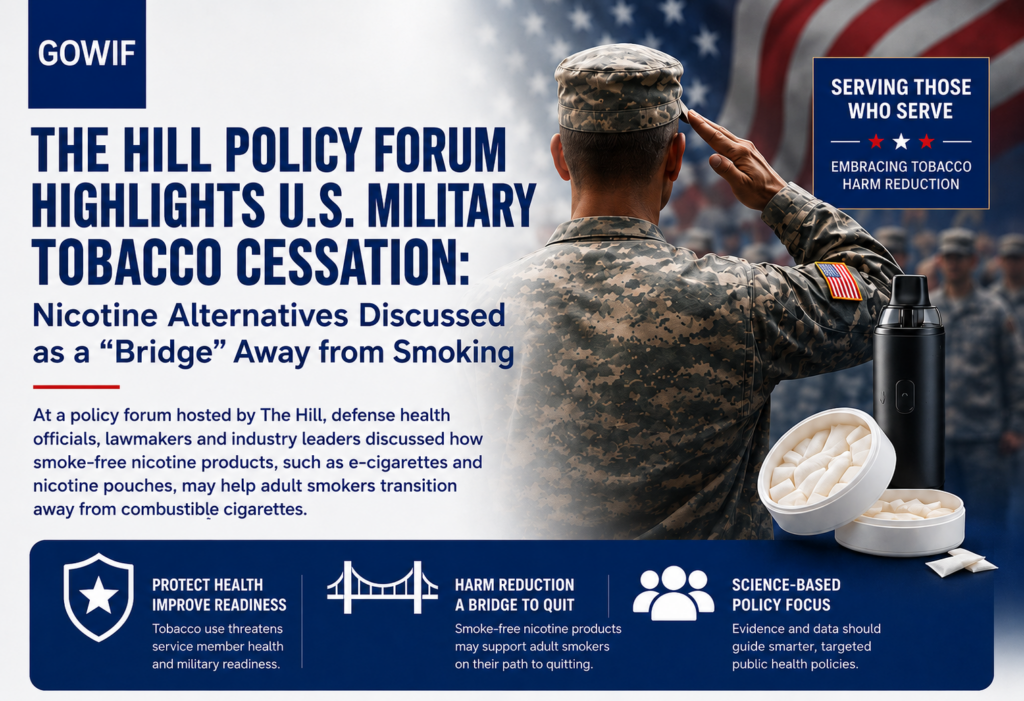
The issue of tobacco use in the U.S. military has returned to the public policy spotlight. According to 2Firsts’ coverage of a policy forum hosted by The Hill, the event titled “Serving Those Who Serve: Embracing Tobacco Harm Reduction” brought together U.S. defense health officials, lawmakers and industry representatives to discuss tobacco use among service members and veterans. During the discussion, smoke-free nicotine products, including e-cigarettes and nicotine pouches, were described as potential “bridges” to help adult smokers reduce their reliance on combustible cigarettes.
The concern is grounded in long-standing public health data. A Health.mil report found that, based on the 2018 Health Related Behaviors Survey, 37.8% of active-duty U.S. service members reported using tobacco or nicotine products. The same data estimated cigarette use at 18.4% and e-cigarette use at 16.2%, while noting that tobacco and nicotine use remain important threats to service member health and military readiness.
In January 2026, the U.S. Department of Veterans Affairs and Department of Defense also released a new Clinical Practice Guideline for Tobacco Use Treatment. The guideline includes two clinical algorithms and 32 evidence-based recommendations designed to support better tobacco-use treatment across VA and DOD healthcare systems.
The ultimate goal remains full cessation. However, the policy debate is increasingly focused on a practical question: how can adult smokers be helped to move away from combustible cigarettes when quitting immediately is difficult? A 2025 Cochrane review found that nicotine e-cigarettes can help some smokers stop smoking for at least six months and may work better than traditional nicotine replacement therapy, while also emphasizing the need for more evidence, especially on newer devices and long-term outcomes.
From a Regulatory Perspective
The U.S. FDA lists a limited number of authorized e-cigarette products for the U.S. market, while clearly stating that authorization does not mean these products are safe or “FDA approved.” The agency also stresses that all tobacco products are harmful and potentially addictive, and people who do not use tobacco products should not start.
The key takeaway from this military tobacco-control discussion is not the promotion of nicotine use, but a more nuanced harm-reduction conversation: for adult smokers who struggle to quit combustible cigarettes, regulated smoke-free nicotine products may play a transitional role. For the global vaping industry, this also suggests that future competition will depend not only on flavor and design, but also on compliance, product quality, adult-focused positioning and responsible communication.